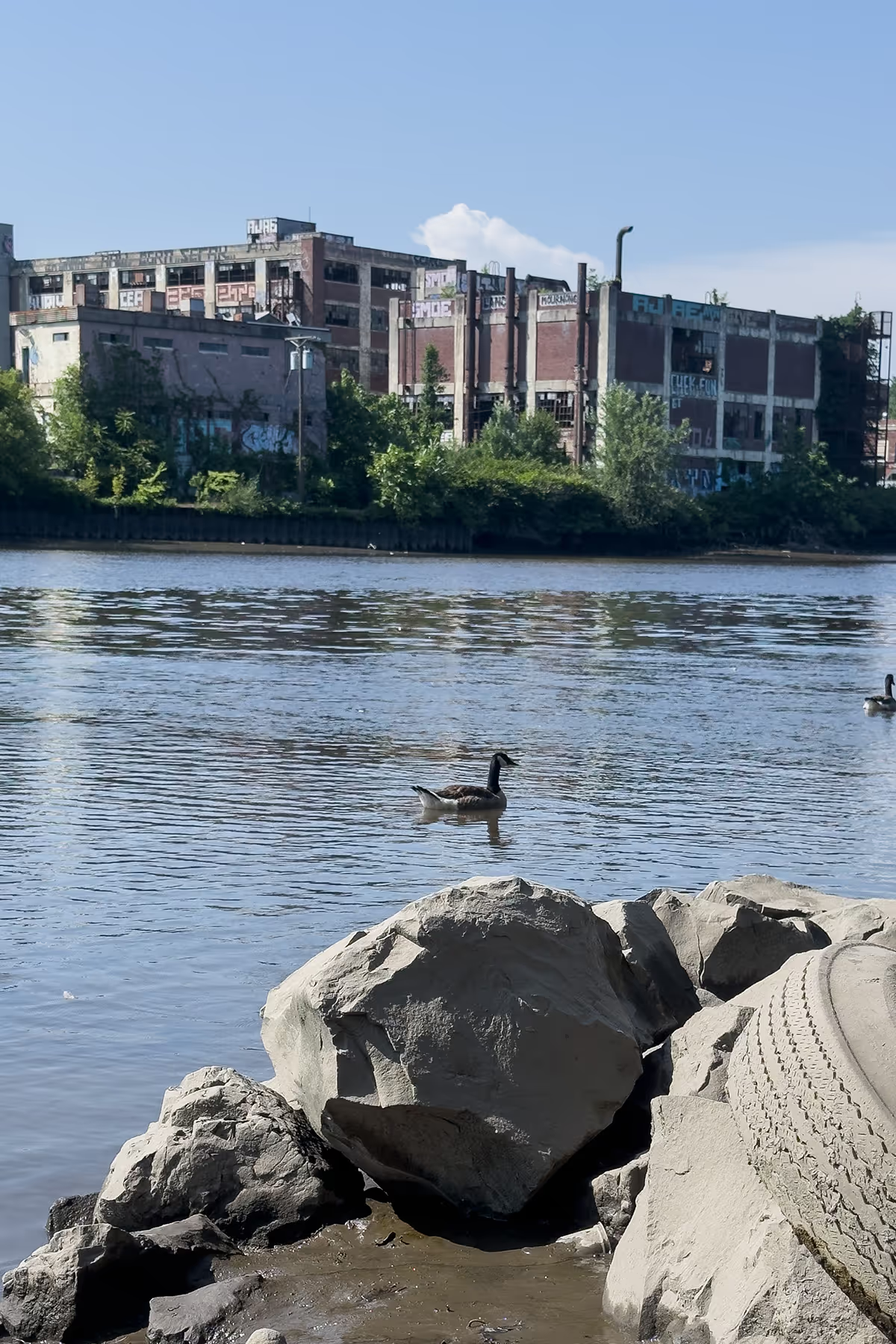

What’s happening with the Lower Passaic River cleanup in 2026?
Cleanup of the Lower Passaic River is in progress under the management of Occidental’s highly regarded subsidiary, Glenn Springs Holdings, Inc.
Glenn Springs works closely with Environmental Resource Holdings, LLC (ERH), another Occidental subsidiary that retained environmental liabilities when OxyChem was sold in early 2026.
ERH and Glenn Springs remain committed to working with the U.S. Environmental Protection Agency (EPA) on the river's ongoing cleanup.
Scroll through this guided tour of the river to learn more about what happened to the river, the remediation work that's been completed already, and what comes next.
See what we're doing to clean up the Passaic
Understanding the Contamination of the Passaic River
Since the Industrial Revolution, countless chemical manufacturing, paint and resin production, metal finishing, and waste oil facilities lined the banks of the Lower Passaic River.
The companies that operated these facilities sent contaminants into sewers and storm drains that discharged into the river, and directly into the river itself. To address the contaminants that sank to the bottom of the river, EPA designated a 17-mile stretch as a Superfund Site. It oversees the river's investigation and cleanup.
Decades of Discharges to the River
From Dundee Dam to Newark Bay, PCBs, pesticides, dioxins, heavy metals, and other pollutants entered the river from scores of facilities. EPA has identified over 100 companies and other entities responsible for the cleanup of the river.
Each red zone on the map represents a responsible facility and a source of pollution to the Passaic River.
A few noteworthy locations are highlighted next.
Givaudan Corporation
Contamination Source
In 1982, the State of New Jersey declared a state of emergency after finding dioxin at the Givaudan Fragrances Corporation facility in Clifton, New Jersey.
Peer-reviewed research from February 2026 confirms that Givaudan Corporation was a major source of dioxin to the Passaic.
The study shows that Givaudan's wastewater discharges contributed dioxin comparable in magnitude to those attributed to the Diamond Alkali facility in Newark (described below).
PPG Industries
Superfund Site
At the Riverside Industrial Park Superfund Site, Pittsburgh Plate Glass Company (later PPG Industries, Inc.) produced paints, resins, and varnishes along the Newark shoreline from 1902 to 1971. Metal pigments, including lead, were brought to the site as an ingredient for paints.
EPA placed this site on the National Priority List in 2009 when an oil spill into the Passaic River was traced back to a pipe that connected to buildings on the property.
EPA has documented the presence of lead, polychlorinated biphenyls (PCBs), and other contaminants here, and is overseeing a cleanup that includes soil removal, capping, and groundwater treatment at this Superfund site.
PSE&G Facilities
Contamination Source
For most of the 20th century, PSE&G operated numerous facilities on the banks of the Passaic River, including three manufactured gas plants and a 60-acre electric generating plant.
PSE&G used and stored barrels of oil containing PCBs and other contaminants at its facilities. PSE&G’s manufactured gas operations also generated large volumes of coal tar waste, which forms a dense sludge that sinks in water and resides in place, slowly releasing contaminants into the water and river sediments. Among the toxic substances found in coal tar are heavy metals like arsenic, chromium, and lead, as well as other chemical contaminants. Significant deposits of this waste sludge have been found in the Passaic River adjacent to PSE&G’s facilities.
PSE&G’s manufacturing sites contained extensive trenchworks, settling ponds, sewage ditches, storm sewers leading directly to the river, and other infrastructure designed to manage its on-site waste.
Diamond Alkali Co.
Superfund Site
The Diamond Alkali Superfund Site includes the former manufacturing facility at 80-120 Lister Avenue in Newark, NJ. In the 1950s and 1960s, the facility manufactured agricultural chemicals including herbicides and other products. According to the EPA, the Lister Avenue plant contributed dioxin to the river.
Diamond Alkali ceased all production in August 1969 and sold the plant to a third party. More than a decade after the Lister Avenue plant was shut down and sold, ERH’s predecessor (OxyChem) became involved in the Passaic location when it purchased the stock of Diamond Shamrock Chemicals Company (DSCC).
While OxyChem never operated the Lister plant, OxyChem inherited legal responsibility for the plant's discharges into the river. ERH has accepted responsibility to help remedy the pollution caused by its predecessor.
Monsanto Company / Pharmacia LLC
Contamination Source
At this chemical manufacturing plant, Monsanto intentionally dumped thousands of gallons of PCB fluids into an unlined dirt pit adjacent to the Passaic River, according to the New Jersey Department of Environmental Protection (NJDEP). At the same time, Monsanto advised the customers who purchased those same PCB-fluid products that PCBs pose a hazard to the environmental and they should use safe disposal practices. Monsanto was later fined by NJDEP for failing to disclose the PCB contamination.
Legacy Vulcan Corporation
Contamination Source
Former chemical plant that used PCBs, lead, PAHs, and other hazardous substances to manufacture chlorine and other products. The plant discharged all waste and runoff directly to the Passaic River, according to the EPA. Employees referred to the Passaic as their “Save All Tank” because of the amount and variety of chemicals they dumped in the river, and described the plant’s impact on the river as “unconscionable.”¹
¹June 16, 1999 Deposition of Bernard Partington in Safety-Kleen Envirosystems Co. v. Continental Casualty Co., et al., Case No. 985528 in the Superior Court of California, County of San Francisco, at MKSK-FD-4211-14 (available here).
What's Been Done So Far
Remedy Design & Sampling
Working with the EPA, Glenn Springs prepared the detailed remedial design for the lower 8.3 miles of the river.
The design work included the collection and analysis of more than 12,000 sediment samples, surveys conducted across roughly 700 acres of river bottom, and engineering solutions to accommodate bridges, utilities, and commercial berths.
Each teal dot represents the location where samples were collected from the river.
Every Dot, a Decision
The Science Behind the Remedy
Each core pulled from the river bottom was analyzed for dioxins, furans, PCBs, pesticides, PAHs, and heavy metals.
That data was used to determine the requirements of the clean cap that will be placed over each section of the river bottom, and to support the engineering work to design the cap.
In the most contaminated stretches of the Passaic, samples were taken as close as every 50 feet in some areas - building one of the most detailed three-dimensional pictures of sediment ever developed at this scale.
What's Happening Now?
The Upper 9 Miles: Design
Upstream, sediments in the upper nine miles between Belleville and Dundee Dam contain the same contaminants present in the lower 8 miles, including dioxin potentially originating from Givaudan’s facility. EPA has selected an interim remedy for the upper river.
Glenn Springs is now performing design and related sampling work here so that active cleanup in the upper river can occur more rapidly in conjunction with the planned cleanup for the lower 8.3 miles.
What Comes Next?
Constructing the Sediment Processing Facility
Before contaminated sediment can leave the river for good, it must be processed. Near River Mile 0.3, a former industrial parcel is the site for the “Upland Processing Facility” - the on-land engine of the entire cleanup.
Dredged material will be piped here in a water slurry, then screened, separated, and dewatered on-site. Sand, gravel, and debris will be sorted for offsite disposal or beneficial reuse. The remaining concentrated solids will be staged in a dedicated nine-bay storage building and rigorously tested before they leave the site.
Preventing Impacts to the Community
Other Support Facilities
The Harrison facility is another critical component of the cleanup where many operations of come together. Material will be managed and moved, river debris handled, crews mobilized - all activities converging on this central location of the river.
Air, water, noise, and odor conditions will be monitored continuously throughout the project. If something changes, the program will respond before impacts reach the community.
Conclusion
A Cleaner Passaic is Coming
The cleanup of the Lower Passaic River is a long-term effort, but the path forward is clear and underway. Continued coordination among EPA, the State of New Jersey, local communities, and responsible parties will reduce health risks and restore the river as a safer place to live, work, and visit.
If you live, work, or recreate near the Passaic, your experience matters. Please stay informed and share this site with neighbors so more people understand what is being done and what comes next for the river.
Proven at Scale
Glenn Springs has a track record of transformation at many sites across the country, including in Copper Basin, Tennessee
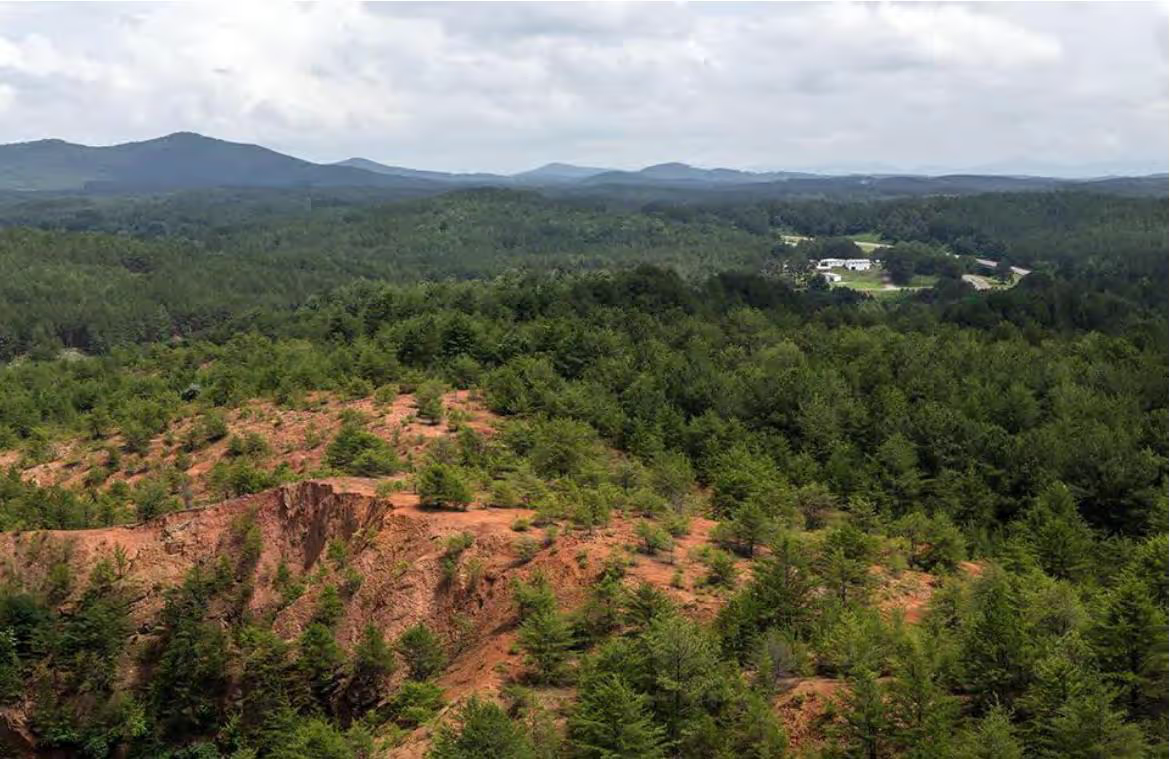
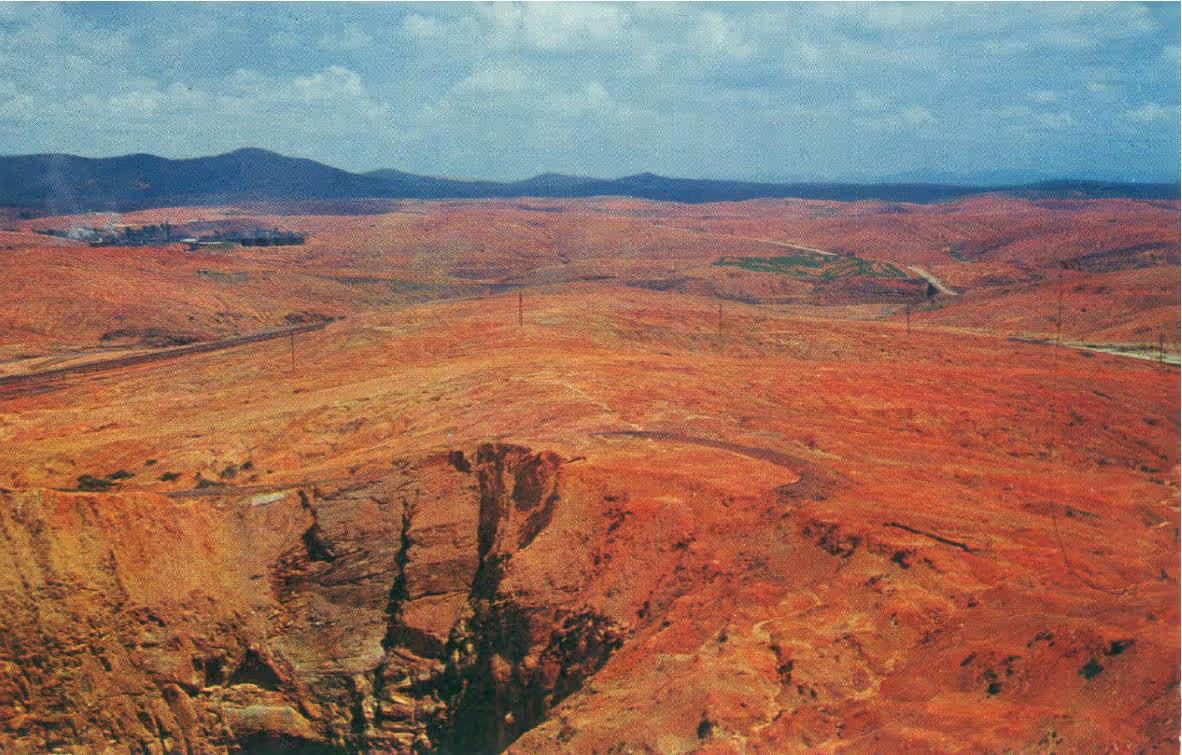
What you're seeing is the same place. The Copper Basin in southeast Tennessee — one of the most severely degraded mining landscapes in the eastern United States — photographed decades apart.
Beginning in 2001, Glenn Springs Holdings entered into voluntary agreements with EPA and the State of Tennessee to restore the land and waterways. The once biologically dead Ocoee River has returned to supporting fish communities, and the project earned the American Council of Engineering Companies' Grand Conceptor Award, an esteemed engineering achievement honor.
Glenn Springs brings that same track record to the Lower Passaic River.